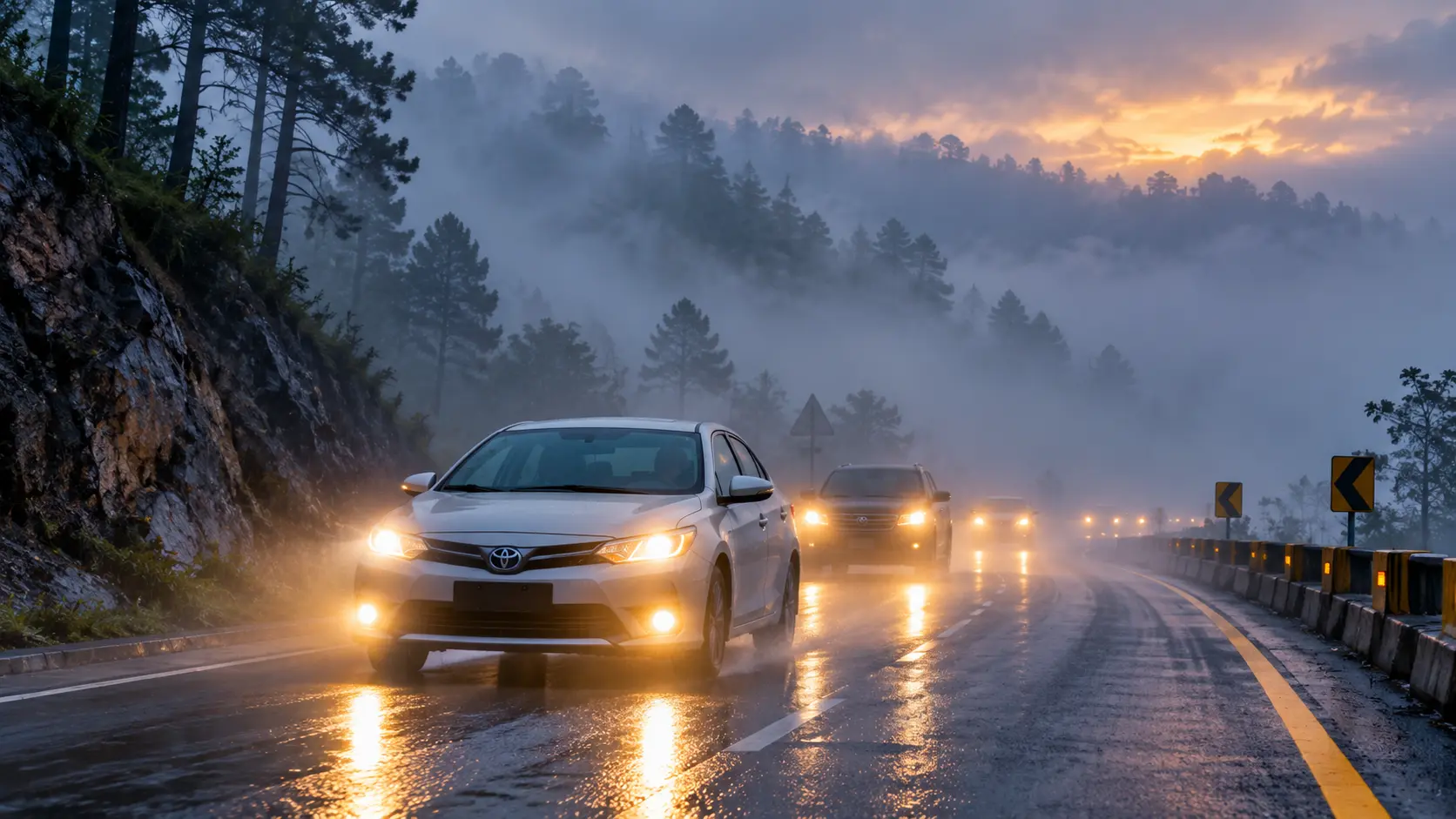
How to Drive Safely in Fog in Pakistan: Essential Winter Car Safety Tips
Fog driving safety tips in Pakistan are especially important during winter, when dense fog can reduce visibility on motorways, highways, and city roads. Poor visibility makes it difficult to judge distances, notice obstacles, and react to sudden braking. Drivers can reduce these risks by slowing down, using the correct headlights, maintaining a safe following distance, and checking road conditions before travelling.
Whether you drive in Lahore, Islamabad, Faisalabad, or other areas affected by winter fog, careful preparation can make your journey safer.
Why Is Driving in Fog Dangerous?
Fog consists of tiny water droplets suspended in the air. These droplets scatter light and reduce the distance a driver can see clearly.
Driving in fog can increase the risk of:
Rear-end collisions caused by sudden braking.
Missing vehicles, pedestrians, road signs, or obstacles.
Losing sight of lane markings and road edges.
Misjudging the speed and distance of other vehicles.
Multi-vehicle accidents when drivers travel too closely together.
The safest approach is to reduce speed and avoid unnecessary journeys when visibility becomes dangerously poor.
Fog Driving Safety Tips in Pakistan
1. Reduce Your Speed Gradually
Slow down as soon as visibility begins to decrease. Drive at a speed that allows you to stop safely within the distance you can see ahead.
Avoid sudden braking or sharp steering movements. If traffic slows down, reduce your speed smoothly and leave enough space between your vehicle and the car in front.
Remember that the posted speed limit is not always a safe speed in dense fog.
2. Use Low-Beam Headlights
Use low-beam headlights when driving through fog. High beams can reflect off water droplets and create glare, making it harder to see the road.
If your vehicle has front fog lights, use them when conditions require them and follow the vehicle manufacturer's instructions. Keep your headlights and rear lights clean so other drivers can see you.
Do not rely on daytime running lights alone, because some vehicles may not illuminate their rear lights when these are active.
3. Maintain a Safe Following Distance
Increase the gap between your vehicle and the vehicle ahead. Fog reduces reaction time because hazards may appear suddenly.
Avoid following another car too closely just because its tail lights are visible. The driver in front may brake unexpectedly or encounter an obstacle.
Leave enough space to slow down and stop smoothly without hitting the vehicle ahead.
4. Keep Your Windscreen Clear
A misted or dirty windscreen can make poor visibility even worse. Before starting your journey:
Clean the inside and outside of the windscreen.
Use the defogger or air conditioning to remove condensation.
Check that the wipers work properly.
Make sure the washer fluid is sufficient.
Keep windows clear of unnecessary obstructions.
If visibility inside the vehicle deteriorates, slow down and stop somewhere safe before continuing.
5. Check Tyres and Brakes
Wet and foggy conditions can make roads slippery. Inspect your tyres for adequate tread depth, correct inflation, and visible damage.
Check that the brakes respond normally and that all exterior lights are working. If your vehicle pulls to one side, vibrates unusually, or has a braking problem, have it inspected before travelling in difficult weather.
Good vehicle maintenance cannot remove the dangers of fog, but it can help your car respond properly when you need to slow down or stop.
6. Avoid Overtaking in Dense Fog
Do not overtake unless you have a clear view of the road and it is safe and legal to do so. In dense fog, oncoming vehicles may be difficult to see until it is too late.
Stay in your lane, follow road markings, and avoid sudden lane changes. Never use another vehicle's tail lights as your only guide to the road ahead.
7. Avoid Sudden Braking and Steering
Abrupt manoeuvres can cause a collision, particularly on wet roads. Anticipate traffic changes, ease off the accelerator early, and brake smoothly.
Keep both hands ready for steering and stay alert for stopped vehicles, roadworks, pedestrians, and unexpected obstacles.
8. Do Not Stop in a Live Traffic Lane
If fog becomes so thick that you cannot continue safely, look for a designated rest area, service area, or other safe place away from moving traffic.
Avoid stopping on a motorway lane or shoulder unless an emergency leaves you no safer alternative. If you must stop in an emergency, make the vehicle as visible as possible and follow local road-safety guidance.
9. Check Motorway and Weather Updates
Before leaving, check official weather forecasts and motorway conditions. Road closures or travel restrictions may be introduced when visibility becomes unsafe.
For Pakistan, consult the National Highways and Motorway Police (NHMP) for relevant travel advisories and road updates. If authorities advise against travelling, delay your journey until conditions improve.
Useful resources:
10. Do Not Depend Completely on Driver-Assistance Systems
Some modern vehicles have adaptive cruise control, automatic emergency braking, lane-keeping assistance, or other driver-assistance features. Dense fog, rain, dirt, and glare may affect cameras or sensors and reduce system performance.
Stay attentive, maintain control of the vehicle, and follow the manufacturer's instructions. Never assume that a safety system can reliably detect every hazard in poor visibility.
Winter Car Safety Checklist Before Driving
Use this checklist before a journey in foggy weather:
Check the weather forecast and road updates.
Clean the windscreen, mirrors, headlights, and rear lights.
Test the headlights, brake lights, indicators, and wipers.
Check tyre condition and pressure.
Confirm that the brakes work properly.
Make sure the fuel or battery charge is sufficient for the trip.
Keep your mobile phone charged for emergencies.
Plan a route with safe stopping places.
Delay travel if visibility is dangerously poor.
A few minutes of preparation can help you identify problems before you encounter difficult road conditions.
Frequently Asked Questions
Is it safe to drive on a motorway in dense fog?
It may be unsafe when visibility is severely reduced. Check official motorway advisories before leaving, drive slowly when conditions permit, and follow any closure or travel restrictions issued by authorities.
Should I use high-beam headlights in fog?
No. High beams can reflect off fog and cause glare. Low-beam headlights are generally more suitable. Use fog lights if fitted and appropriate for the conditions.
How much distance should I leave between cars?
Leave a larger gap than you would in clear weather. The exact distance depends on speed, visibility, road surface, and traffic. Make sure you have enough room to stop safely within the visible road ahead.
Should I use cruise control in fog?
It is better to avoid cruise control in dense fog or on slippery roads because you may need to adjust speed immediately as conditions change.
What should I do if visibility suddenly becomes extremely poor?
Ease off the accelerator, avoid sudden manoeuvres, and look for a safe place away from moving traffic. Do not stop in a live lane. Follow official road instructions and wait for conditions to improve before continuing.
Can good tyres make fog driving completely safe?
No. Good tyres support braking and handling, but they cannot restore visibility or eliminate the risk of collisions. Reduce speed, increase following distance, and avoid travelling when conditions are unsafe.
Final Thoughts
Following these fog driving safety tips in Pakistan can help drivers prepare for winter journeys and make safer decisions on the road. Reduce speed, use low-beam headlights, maintain a safe distance, keep your windscreen clear, and check official motorway updates before travelling.
The most important rule is simple: if visibility is dangerously poor, delay your journey whenever possible.
At KOZAN Motors, we encourage drivers to maintain their vehicles regularly and make road safety a priority in every season.