BMW X5 2026: Features, Performance, Design and Buying Guide
The BMW X5 2026 is a premium luxury SUV designed for drivers who want a combination of comfort, performance, modern technology, and everyday practicality. The X5 name has been part of BMW’s lineup since 1999, helping establish the luxury Sports Activity Vehicle (SAV) category.
The latest BMW X5 generation introduces a refreshed exterior design, a more digital interior, and a broader choice of powertrain technologies. Depending on the market and model variant, buyers may find petrol, diesel, plug-in hybrid, and fully electric options, with hydrogen technology also planned for the wider X5 family.
In this detailed guide, we explore the BMW X5 2026 design, interior, engine options, technology, safety, running costs, and important buying considerations for international buyers.
1. BMW X5 2026 Exterior Design and Styling
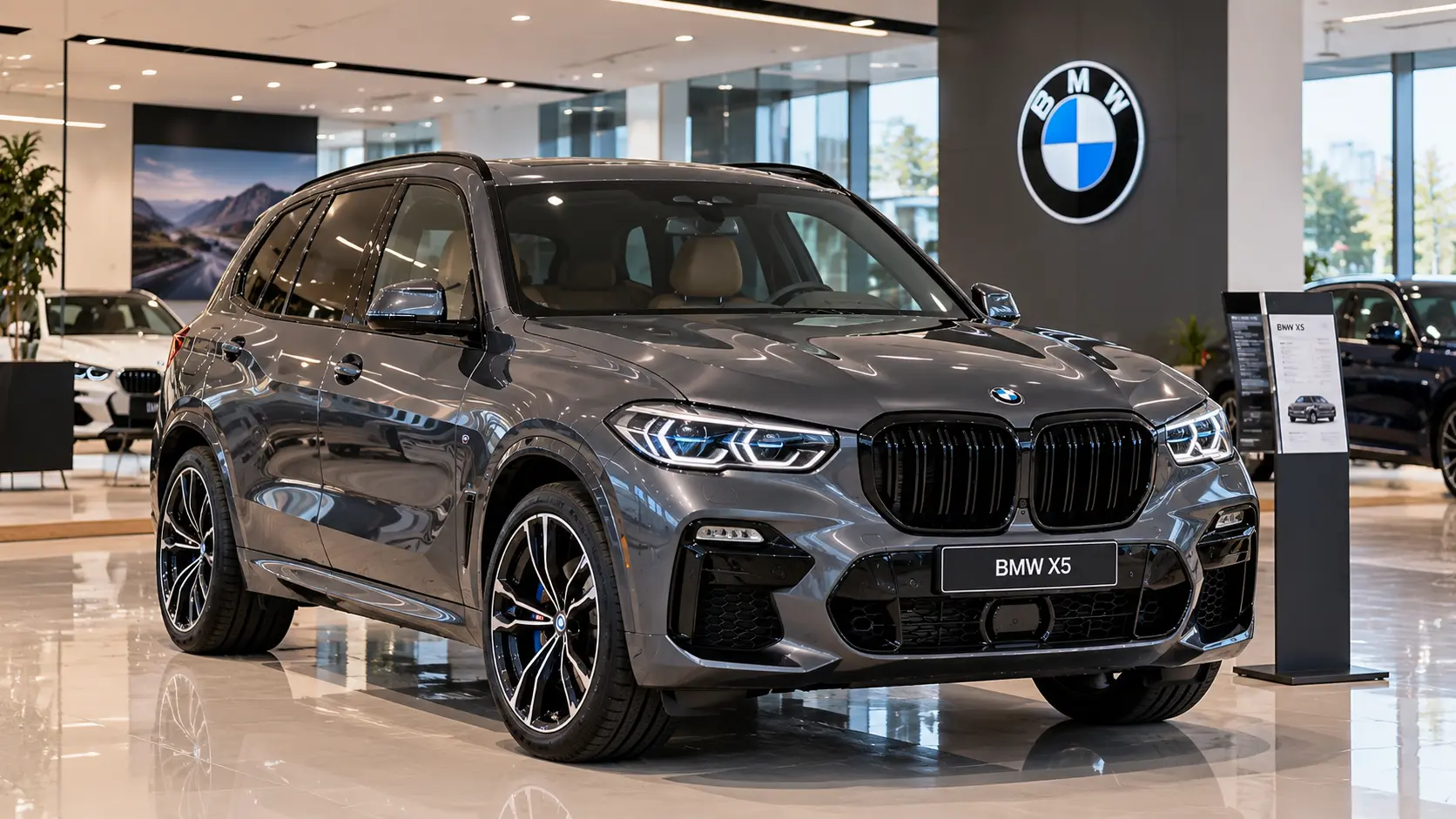
The BMW X5 has a strong road presence thanks to its large body, distinctive front grille, muscular wheel arches, and sporty proportions. The latest generation develops this familiar appearance with cleaner surfaces and a more modern design direction.
Front Design
The front of the new BMW X5 features a redesigned kidney grille and distinctive double-X lighting elements. These design details help give the SUV a recognizable appearance, particularly at night.
Depending on the selected trim, buyers may find different grille finishes, lighting designs, and exterior styling packages.
Side Profile and Wheels
The side profile combines an upright SUV stance with a dynamic roofline. Muscular wheel arches and carefully shaped body panels contribute to its premium appearance.
BMW offers different wheel designs and sizes depending on the variant and market. The latest generation includes wheel options of up to 23 inches, although availability depends on the specification.
Rear Design
The rear design continues the SUV’s wide and confident appearance. Lighting details, bumper styling, and exhaust arrangements may differ between standard models and sport-oriented variants.
Overall, the BMW X5 2026 is designed to appeal to buyers who want a luxury SUV that looks sophisticated without losing its sporty character.
2. Interior Comfort and Cabin Quality
A luxury SUV should offer more than attractive exterior styling. Cabin comfort, seating quality, storage, and technology all contribute to the driving experience.
The latest BMW X5 introduces a redesigned cabin with a more horizontal dashboard layout, modern materials, and a digital cockpit focused on the driver and front passenger.
Seating and Passenger Space
The BMW X5 is designed to accommodate up to five occupants in its standard two-row configuration. Front passengers benefit from an elevated seating position, while the rear seats provide space for family members or adult passengers.
Seat materials, adjustment functions, ventilation, and massage features depend on the selected trim and optional equipment.
Interior Materials and Atmosphere
Depending on the specification, the cabin may feature premium upholstery, decorative surfaces, ambient lighting, and carefully finished dashboard and door panels.
The latest generation also introduces additional material choices, including slate as an optional decorative surface. Equipment can vary between countries, so buyers should check the exact vehicle specification.
Boot Space and Practicality
The BMW X5 is suitable for shopping, luggage, family travel, and everyday activities. Its rear cargo area can accommodate a range of bags and travel equipment.
Cargo capacity varies by generation and powertrain. For example, BMW USA lists 27.3 to 67.7 cubic feet for the model covered by its current US overview. Buyers should confirm the luggage capacity of their exact vehicle before purchasing.
Performance is one of the BMW X5’s main attractions. The model family offers different powertrain technologies to suit drivers with different priorities, from traditional long-distance driving to regular electric commuting.
Petrol Engines
Petrol-powered BMW X5 variants are designed to provide responsive acceleration and smooth performance. They may appeal to buyers who prefer conventional refuelling and want a premium SUV for city driving and longer journeys.
Power output, acceleration, drivetrain, and fuel requirements depend on the particular engine and market.
Diesel Engines
Diesel variants may be available in selected markets. They can be attractive to drivers who regularly cover long distances and want a powertrain suited to sustained motorway use.
However, diesel availability and emissions regulations vary by country. Buyers should also consider local fuel quality, servicing costs, and applicable vehicle regulations.
Plug-In Hybrid Models
A plug-in hybrid combines a combustion engine with an electric motor and rechargeable battery. This arrangement can allow some daily journeys to be completed using electric power, provided the battery is charged and the trip falls within the available electric range.
BMW’s published information for the X5 plug-in hybrid family includes different figures according to model year and testing market. Electric range should therefore be checked against the exact variant rather than assumed to be identical across all versions.
Fully Electric BMW iX5
The new BMW iX5 expands the family into fully electric driving. BMW has announced the iX5 60 xDrive with sixth-generation eDrive technology and an 800-volt electrical architecture.
BMW’s provisional WLTP range figures for this version are approximately 645 to 845 kilometres, depending on equipment. These figures are preliminary and should not be treated as a guaranteed real-world range. Weather, speed, wheel choice, temperature, and driving style can all affect electric range.
For buyers considering an electric luxury SUV, charging access and local charging infrastructure are important factors.
4. Technology and Infotainment
Modern luxury vehicles rely on digital systems to provide navigation, entertainment, communication, and driving information. The latest BMW X5 brings newer display and operating technologies into the cabin.
BMW Panoramic iDrive
The new generation features BMW Panoramic iDrive with BMW Operating System X. Its digital environment is designed to make vehicle information easier to view and personalize.
The system includes a central display and BMW Panoramic Vision, which projects selected information across the lower portion of the windscreen. A three-dimensional head-up display and a passenger screen may also be available, depending on the specification.
Smartphone Connectivity and Navigation
Connectivity features can make daily driving more convenient by helping drivers access navigation, communication, and selected smartphone functions.
Available features may vary according to the infotainment version, country, software configuration, and optional packages. Buyers should check whether the particular vehicle supports their preferred smartphone and navigation services.
Cameras and Parking Assistance
Camera-based systems and parking assistance technologies can help drivers manoeuvre in tight spaces and understand their surroundings. Depending on the model and equipment package, available features may include parking assistance, surround-view cameras, and additional driver-support functions.
Drivers should remember that assistance systems do not replace careful observation or safe driving.
5. Safety and Driver Assistance
Safety is an important consideration when choosing a family or luxury SUV. The BMW X5 offers a range of driver assistance technologies, with equipment varying by model, year, and market.
Collision Warning and Lane Assistance
Depending on the vehicle specification, safety systems may include forward collision mitigation, lane departure warnings, blind-spot monitoring, and distance-control assistance.
These technologies are designed to help drivers identify certain risks and respond more effectively. Their availability and operating conditions should be confirmed in the official equipment list.
Cameras and Parking Support
Camera systems can help drivers see areas around the vehicle that may be difficult to observe directly. Parking sensors and parking assistance features can also make low-speed manoeuvres easier.
Important Safety Consideration
Safety equipment is not identical across every BMW X5. Before purchasing, review the vehicle’s specification sheet, safety ratings applicable to your market, service history, and any outstanding recalls.
6. Practicality for Families and Everyday Driving
Although the BMW X5 has a sporty character, it is also designed for everyday use. Its raised driving position, spacious cabin, and versatile cargo area make it suitable for commuting, family travel, and longer road trips.
City Driving
The elevated seating position can provide a commanding view of the road. However, the X5 is a large vehicle, so parking space, road width, and traffic conditions should be considered before buying.
Parking sensors and available camera systems may help in crowded urban areas.
Long-Distance Travel
A comfortable cabin, supportive seats, and a range of available powertrains make the X5 a candidate for long-distance journeys. The best configuration depends on how frequently the vehicle is used, the distances travelled, and the availability of fuel or charging facilities.
Family and Luggage Needs
The two-row layout is suitable for many families, but buyers who regularly need seating for seven should investigate a larger three-row SUV instead. Child-seat compatibility, rear-seat space, luggage capacity, and ease of entry are worth checking in person.
7. BMW X5 2026 Fuel Economy and Running Costs
The purchase price is only one part of owning a luxury SUV. Fuel, servicing, insurance, tyres, repairs, and depreciation can all affect the total cost of ownership.
Fuel Economy
Fuel economy depends on the engine, drivetrain, vehicle weight, tyre choice, traffic, climate, and driving style. Diesel, petrol, and plug-in hybrid versions can have different operating costs.
Plug-in hybrids may reduce fuel use when they are charged regularly and driven within their practical electric range. If they are rarely charged, their fuel consumption may be less attractive than expected.
Maintenance and Repairs
Luxury SUVs can require more expensive replacement parts, tyres, and specialist servicing than smaller mainstream vehicles. Regular maintenance helps identify problems early and supports long-term reliability.
Buyers should compare service prices, warranty coverage, parts availability, and the availability of qualified BMW technicians in their country.
Insurance and Depreciation
Insurance premiums depend on the driver, location, vehicle value, repair costs, and local insurance rules. Depreciation depends on demand, mileage, condition, age, specification, and the local used-car market.
Before committing to a purchase, calculate the expected monthly and annual ownership costs rather than comparing purchase prices alone.
8. Buying a New, Used, or Imported BMW X5
The right BMW X5 depends on budget, intended use, and local availability. A new vehicle may provide a current specification and manufacturer warranty, while a used vehicle may offer a lower purchase price.
Check the Model Year and Generation
The phrase “BMW X5 2026” can refer to different specifications depending on the country and the exact vehicle. The newly announced fifth-generation model and earlier X5 vehicles registered or sold as 2026 models should not automatically be treated as identical.
Always verify the model year, generation, engine, trim, production date, and equipment using the vehicle identification number (VIN) and official documentation.
Inspect Service History
For a used BMW X5, review service invoices and maintenance records. Confirm that scheduled maintenance was completed and investigate any unexplained gaps in the history.
A qualified independent inspection can help identify mechanical, electronic, bodywork, or accident-related problems before purchase.
Check the Vehicle Identification Number
The VIN can help establish the vehicle’s identity and specification. Use appropriate official or reputable vehicle-history services to investigate previous damage, mileage records, ownership history, and recalls where those records are available.
Do not rely solely on a seller’s description or photographs.
Imported Vehicle Considerations
Imported BMW X5 models may have different specifications, software features, emissions equipment, and warranty conditions from locally supplied vehicles.
Before importing, check customs duties, taxes, registration requirements, emissions rules, parts availability, and whether the vehicle can be serviced properly in the destination country.
9. BMW X5 Compared with Other Luxury SUVs
The BMW X5 competes with premium SUVs from several established manufacturers. The best choice depends on driving preferences, passenger needs, comfort expectations, and ownership budget.
BMW X5 vs Mercedes-Benz GLE
The Mercedes-Benz GLE is a direct luxury-SUV alternative. Buyers can compare interior design, infotainment, ride comfort, engine options, available safety technology, and the cost of servicing.
A test drive in both vehicles is a useful way to assess seating comfort, visibility, steering response, and everyday usability.
BMW X5 vs Audi Q7
The Audi Q7 is worth considering for buyers who prioritize a different cabin layout and, in applicable versions, additional seating capacity. Availability and seating configuration depend on the market and model.
The BMW X5’s standard layout is generally focused on two rows, so buyers who regularly need seven seats should compare the exact versions carefully.
BMW X5 vs Volvo XC90
The Volvo XC90 is another premium SUV to consider, especially for buyers comparing family practicality, cabin comfort, and safety technology.
Rather than choosing solely on brand reputation, compare the exact equipment, warranty, local service network, price, and total cost of ownership.
10. Who Should Consider the BMW X5 2026?
The BMW X5 may be a good fit for buyers who want a premium SUV with a comfortable cabin, confident road presence, modern technology, and a range of powertrain choices.
It may suit:
Families looking for a spacious two-row luxury SUV.
Drivers who regularly travel long distances.
Buyers who value performance alongside comfort.
Drivers considering plug-in hybrid or electric mobility, where suitable versions and charging facilities are available.
Used-car buyers who can verify maintenance records and obtain a professional inspection.
It may be less suitable for buyers seeking the lowest possible running costs, a compact city vehicle, or standard seven-seat accommodation.
Frequently Asked Questions
Is the BMW X5 2026 a fully electric SUV?
The BMW X5 family includes combustion-engine and plug-in hybrid options, and the new generation introduces the fully electric BMW iX5. Availability and launch timing vary by model and market.
How many people can the BMW X5 seat?
The standard BMW X5 configuration is generally a five-seat, two-row SUV. Buyers should verify the seating arrangement of the exact vehicle.
What engine options are available?
Depending on the generation and market, the X5 family includes petrol and diesel engines, plug-in hybrid versions, and the new fully electric iX5. Hydrogen technology has also been announced for a later stage.
What is the electric range of the BMW iX5?
BMW has published provisional WLTP range figures of approximately 645 to 845 kilometres for the new iX5 60 xDrive, depending on equipment. Final certified figures and real-world results may differ.
Is the BMW X5 expensive to maintain?
Maintenance costs can be higher than those of many mainstream SUVs because of specialist parts, tyres, technology, and labour. Actual costs depend on the model, condition, location, and service provider.
Is a used BMW X5 worth buying?
A used X5 may offer good value if it has a verified history, proper maintenance, and a condition that matches the asking price. A professional inspection and review of the VIN are recommended before purchase.
What should I check before buying an imported BMW X5?
Confirm the VIN, generation, engine, mileage history, accident records where available, import duties, registration eligibility, emissions compliance, warranty terms, and local parts and servicing support.
How does the BMW X5 compare with other luxury SUVs?
The X5 competes with vehicles such as the Mercedes-Benz GLE, Audi Q7, and Volvo XC90. The right choice depends on the specific model, seating needs, driving preferences, features, and ownership costs.
Final Verdict
The BMW X5 2026 continues the model’s focus on luxury, performance, technology, and everyday versatility. The latest generation adds a more modern design, a digitally focused cabin, and an expanded choice of powertrain technologies, including a fully electric version.
However, the best BMW X5 for any buyer depends on the exact generation, engine, equipment, and market. Before purchasing, compare official specifications, check local prices and taxes, review warranty coverage, and calculate expected running costs.
For international buyers, careful research and a test drive can help determine whether the BMW X5 is the right luxury SUV for their needs.
Sources and Further Reading
Specifications, equipment, availability, prices, and performance figures vary by market and vehicle configuration. Confirm details with the official BMW website or an authorized dealer before making a purchase.